The Mary Celestia
The Mary Celestia was a sleek Confederate blockade runner, built for speed and secrecy. In 1864, guided by a Bermudian pilot who boasted he knew every rock “as well as my own house,” she struck the reef and sank in just eight minutes. Only the cook, who returned for his belongings, was lost.
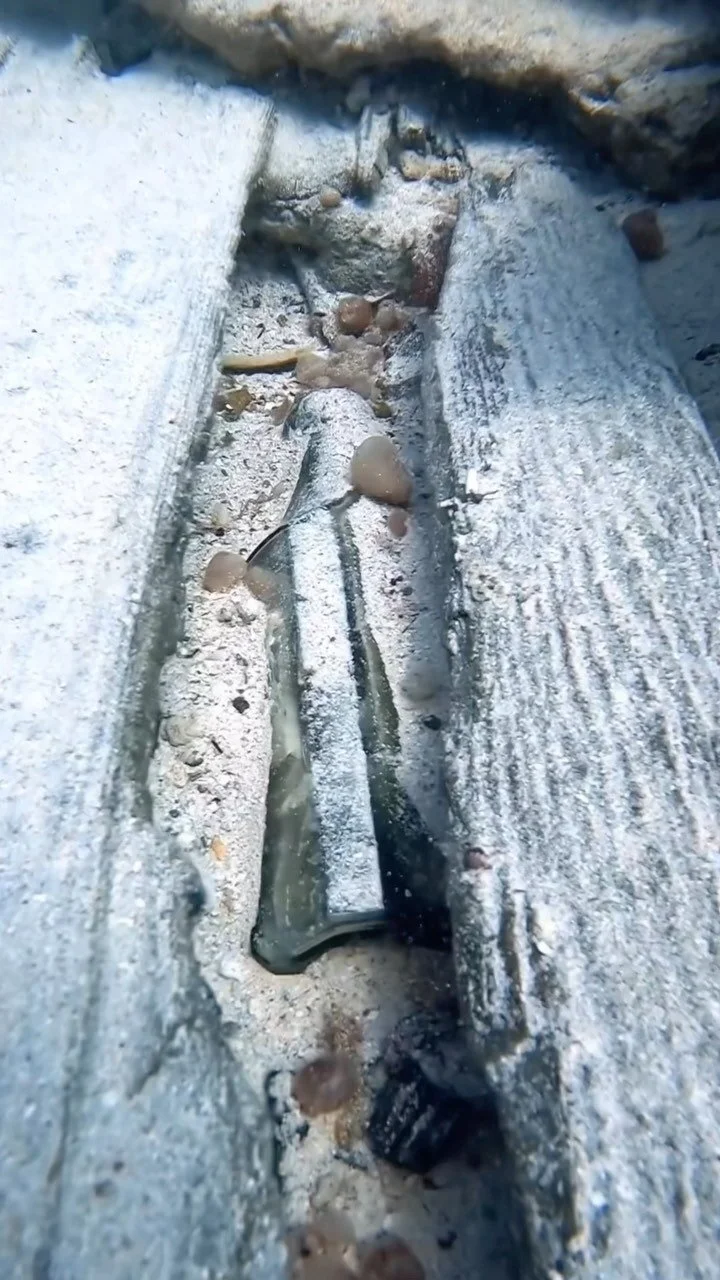
She rests in 55 feet of water, her paddle wheel still intact — a rare treasure. In 2011 storms uncovered hidden cargo in her bow: sealed wine, perfume, and artifacts untouched since the Civil War. The perfume was even recreated, letting modern visitors catch the scent of a vanished world.
The Hermes
Built in 1943 as a Navy buoy tender, the Hermes ended her working life broken down in Bermuda. Sold for a single dollar, she was scuttled in 1984 to create an artificial reef — and she became one of the island’s most beloved dive sites.
Sitting upright in 70–75 feet of water, the Hermes feels almost ready to sail again. Her hatches were removed for safe penetration, and divers can explore her cargo hold, crew quarters, and engine room. Schools of barracuda and snapper swirl around her, and the surrounding reef is pristine.
Constellation and Montana
Two wrecks from two different centuries lie almost atop one another, woven together by history and reef.
Montana (1863) was a Confederate blockade runner that hit the reef and sank in 30 feet of water. Her bow is still recognizable, her engine stands upright like a monument, and her paddle wheels form ghostly circles on the seabed.
Constellation (1942) was a four‑masted schooner carrying war supplies — cement, slate, Scotch, glassware, even drug ampules — when her pumps failed. While waiting for a pilot boat, she drifted onto the reef and sank just 50 feet from the Montana.
Their intertwined story inspired Peter Benchley’s The Deep, and diving them feels like stepping into the opening chapter of an adventure novel.
Two tugs (The King & Forceful)
The King, once a treasure‑hunting and dive boat, was sunk in 1984 as Bermuda’s first artificial reef. Storms have battered her over the years, leaving her hull pierced with openings that divers can peer through like windows into her past.
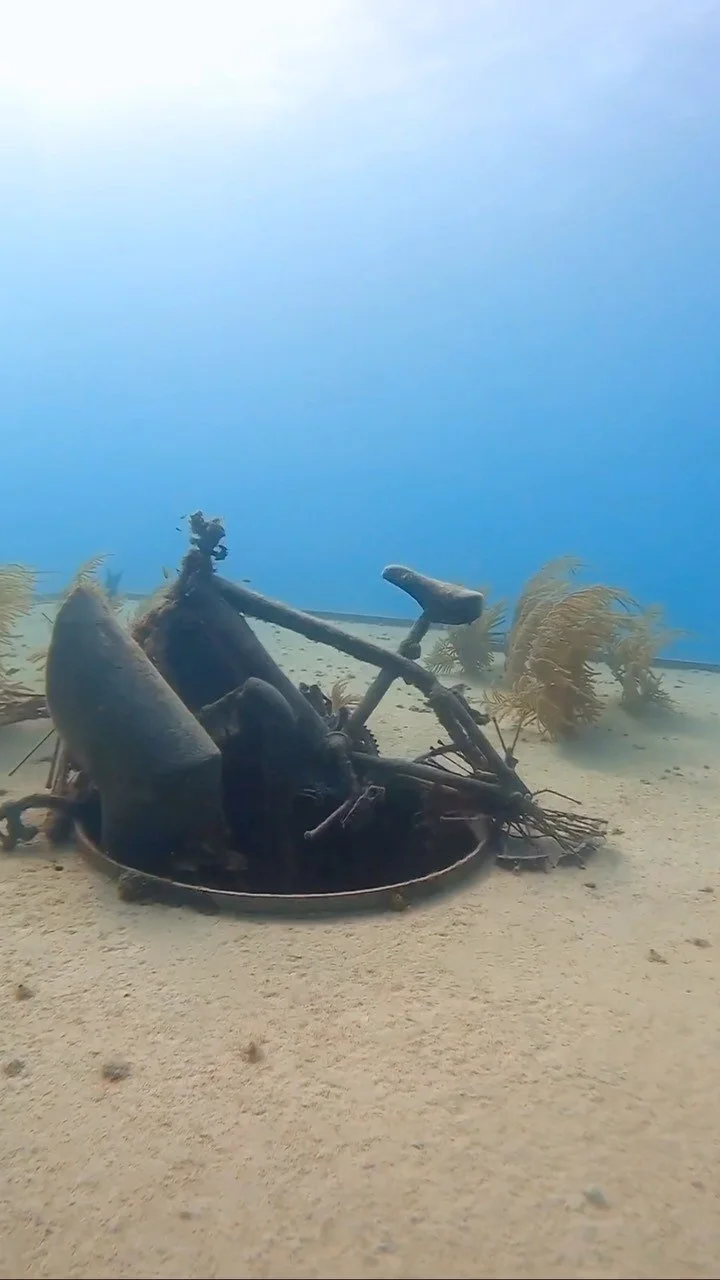
Nearby lies the Forceful, a former Dockyard tug intentionally sunk in a sand patch. Storms pushed her against the reef, creating dramatic swim‑throughs in her engine room and a memorable pass beneath her huge propeller. “Bermuda” is still boldly stamped on her stern, a perfect photo moment. The two wrecks sit in 65 feet of water, separated by an S‑shaped ribbon of sand.
North Carolina
The North Carolina, a Scottish‑built barque, limped into Bermuda in 1879 with a damaged rudder. Repairs were made, spirits lifted, and she set out again — only to run aground two days later. A final attempt to refloat her ended disastrously when an anchor smashed through her hull, sending her straight to the seabed.
She now sits upright on a sandy bottom, dignified even in ruin. Her bow and stern remain recognizable, while the mid‑section has collapsed into a tangle of iron and coral. It feels like visiting a ship that tried everything to survive but ultimately surrendered to the sea.
Minnie Breslauer
The Minnie Breslauer was a 300‑foot English steamer on her maiden voyage when she struck Bermuda’s reef on New Year’s Day 1873. She was being towed toward safety when she finally succumbed and slipped beneath the waves.
Today her bow lies shattered across the reef, while her stern rests more peacefully in the sand. Her enormous boiler and propeller remain unmistakable, silent reminders of a ship that never got to finish her first journey.
The Airplane
This wreck isn’t a ship at all but a Cold War‑era Boeing B‑50 tanker, heavily modified and flying home from the Azores in 1963. When an auxiliary jet engine exploded mid‑flight, flames raced across the wing. Six crew members parachuted to safety before the aircraft tore apart and fell into the sea. The commander, John “Curley” Moore, was still strapped into his seat when divers first reached the wreck.
The plane now lies in two great pieces nestled among coral heads. Aluminum gleams softly in the blue light, and schools of sergeant‑majors farm algae along the fuselage. It feels strangely peaceful — a machine built for war resting quietly in a thriving reef.
The Darlington
The Darlington was a sturdy iron steamer with a powerful engine and a hold full of cotton and grain when she approached Bermuda in 1886. But unfamiliar waters and a missing lookout sealed her fate. She struck the Western Reef with a shudder that echoed through her hull, and the sea claimed her quickly.
Now she rests on her port side in calm, shallow water. Her boilers, winches, and propeller shaft are still easy to recognize, and her rudder points upward like a finger marking her final position. On stormy days it even breaks the surface, reminding passing boats of the ship that lies below.
L'Herminie
L’Herminie was once a proud French frigate, bristling with 60 guns and built to project power across the world. But in 1837, after her crew was ravaged by yellow fever off Mexico, she was ordered home. Heavy Atlantic seas forced her captain to seek shelter in Bermuda — but the island’s northern reef had other plans. She grounded hard and never sailed again.
The Lartington
The Lartington set out from Savannah in 1879 loaded with cotton and confidence, a hybrid sail‑and‑steam workhorse built to cross oceans. Four days into her voyage, a monstrous wave — sailors swore it towered over 100 feet — slammed into her hull and opened a fatal wound. Captain George Dixon turned for Bermuda, racing the sea itself. She almost made it. The Lartington struck the reef at Western Blue Cut and settled into the shallows, her crew rescued and her cargo mostly saved.
Today her bow still rises dramatically toward the surface, an upturned silhouette that glows in the sun. Her boilers rest like sleeping giants, and the broken propeller at her stern feels like a final exhale from a ship that fought hard to survive.