
Wreck Capital of the Atlantic & A Reef System to Remember
Bermuda’s maritime history is written across the seafloor. For over four centuries, ships navigating the island’s treacherous barrier reefs have run aground on the very formations that protect our shores. The result is one of the Atlantic’s most diverse collections of shipwrecks, from wooden trading vessels to iron steamers and modern steel ships.
Adding to the intrigue is Bermuda’s position within the legendary Bermuda Triangle. While the myths are larger than life, the reality is that centuries of heavy maritime traffic, unpredictable weather, and shallow reef platforms have created a coastline rich in history and mystery. Many of the wrecks resting here today are reminders of the challenges sailors once faced.
Most wrecks lie in accessible depths and are ideal for all divers, offering the chance to glide over preserved timbers, intact hulls, and coral‑covered machinery, each wreck slowly transforming into a living reef.
Bermuda’s natural reefs are just as extraordinary. Sitting at the edge of the temperate Atlantic, they are among the most northern coral reefs in the world, thriving thanks to the island’s warm subtropical waters and sheltered platform.
Born from an ancient volcano, Bermuda’s porous limestone foundation has been sculpted by thousands of years of wave action. This relentless shaping has created a breathtaking underwater world of tunnels, arches, caverns, and swim‑throughs, now covered in vibrant coral and teeming with marine life.
These formations form the backbone of one of the healthiest reef systems on Earth, a place where geology and biology intertwine to create a thriving marine sanctuary. Our reef sites offer a mix of dramatic topography and gentle coral gardens, perfect for divers seeking both geological wonder and ecological beauty in a single dive.
WRECK sites
The Mary Celestia
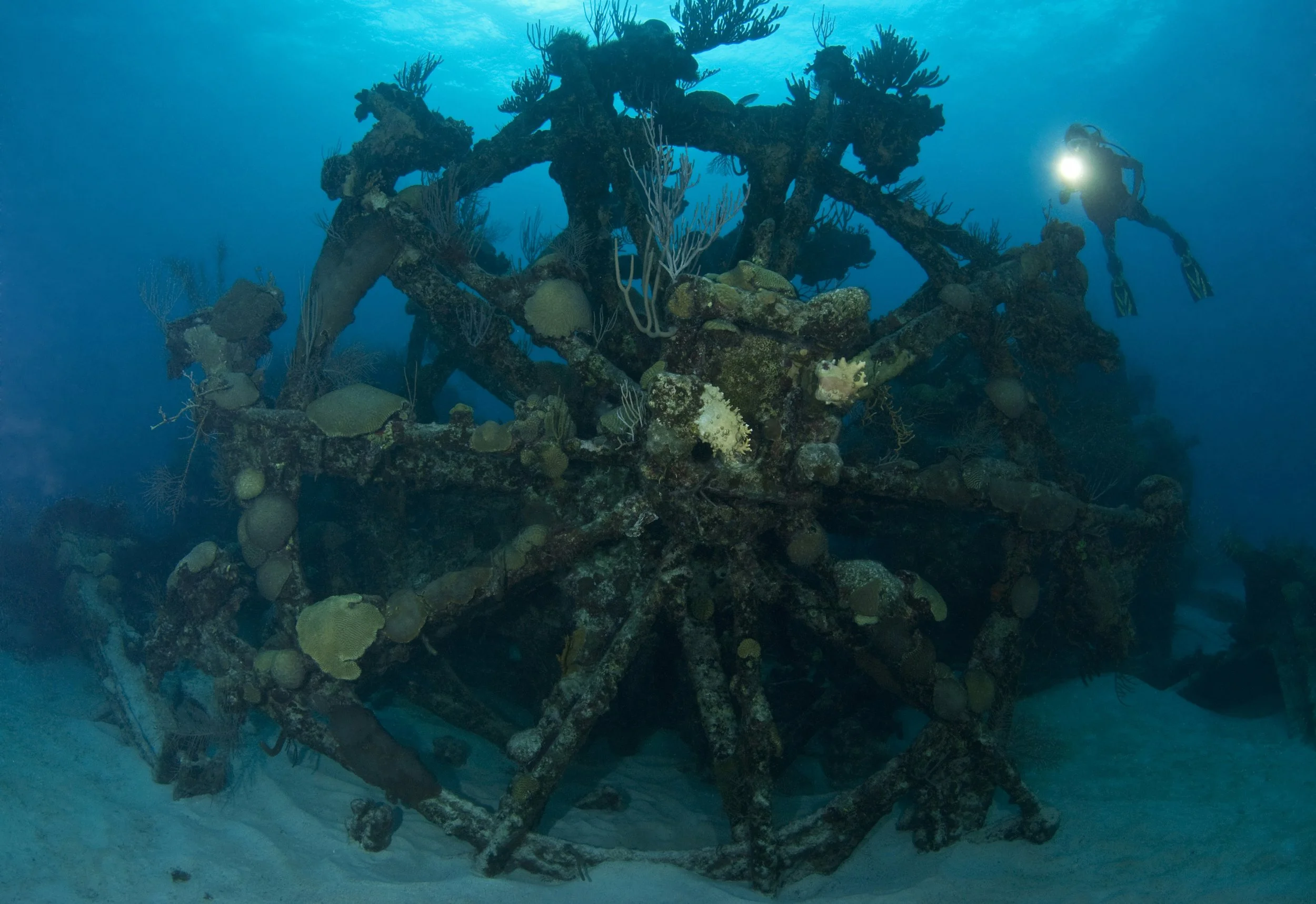
The Mary Celestia was a sleek Confederate blockade runner, built for speed and secrecy. In 1864, guided by a Bermudian pilot who boasted he knew every rock “as well as my own house,” she struck the reef and sank in just eight minutes. Only the cook, who returned for his belongings, was lost.
She rests in 55 feet of water, her paddle wheel still intact — a rare treasure. In 2011 storms uncovered hidden cargo in her bow: sealed wine, perfume, and artifacts untouched since the Civil War. The perfume was even recreated, letting modern visitors catch the scent of a vanished world.
The Hermes
Built in 1943 as a Navy buoy tender, the Hermes ended her working life broken down in Bermuda. Sold for a single dollar, she was scuttled in 1984 to create an artificial reef — and she became one of the island’s most beloved dive sites.
Sitting upright in 70–75 feet of water, the Hermes feels almost ready to sail again. Her hatches were removed for safe penetration, and divers can explore her cargo hold, crew quarters, and engine room. Schools of barracuda and snapper swirl around her, and the surrounding reef is pristine.
Constellation and Montana
Two wrecks from two different centuries lie almost atop one another, woven together by history and reef.
Montana (1863) was a Confederate blockade runner that hit the reef and sank in 30 feet of water. Her bow is still recognizable, her engine stands upright like a monument, and her paddle wheels form ghostly circles on the seabed.
Constellation (1942) was a four‑masted schooner carrying war supplies — cement, slate, Scotch, glassware, even drug ampules — when her pumps failed. While waiting for a pilot boat, she drifted onto the reef and sank just 50 feet from the Montana.
Their intertwined story inspired Peter Benchley’s The Deep, and diving them feels like stepping into the opening chapter of an adventure novel.
Two tugs (The King & Forceful)
The King, once a treasure‑hunting and dive boat, was sunk in 1984 as Bermuda’s first artificial reef. Storms have battered her over the years, leaving her hull pierced with openings that divers can peer through like windows into her past.
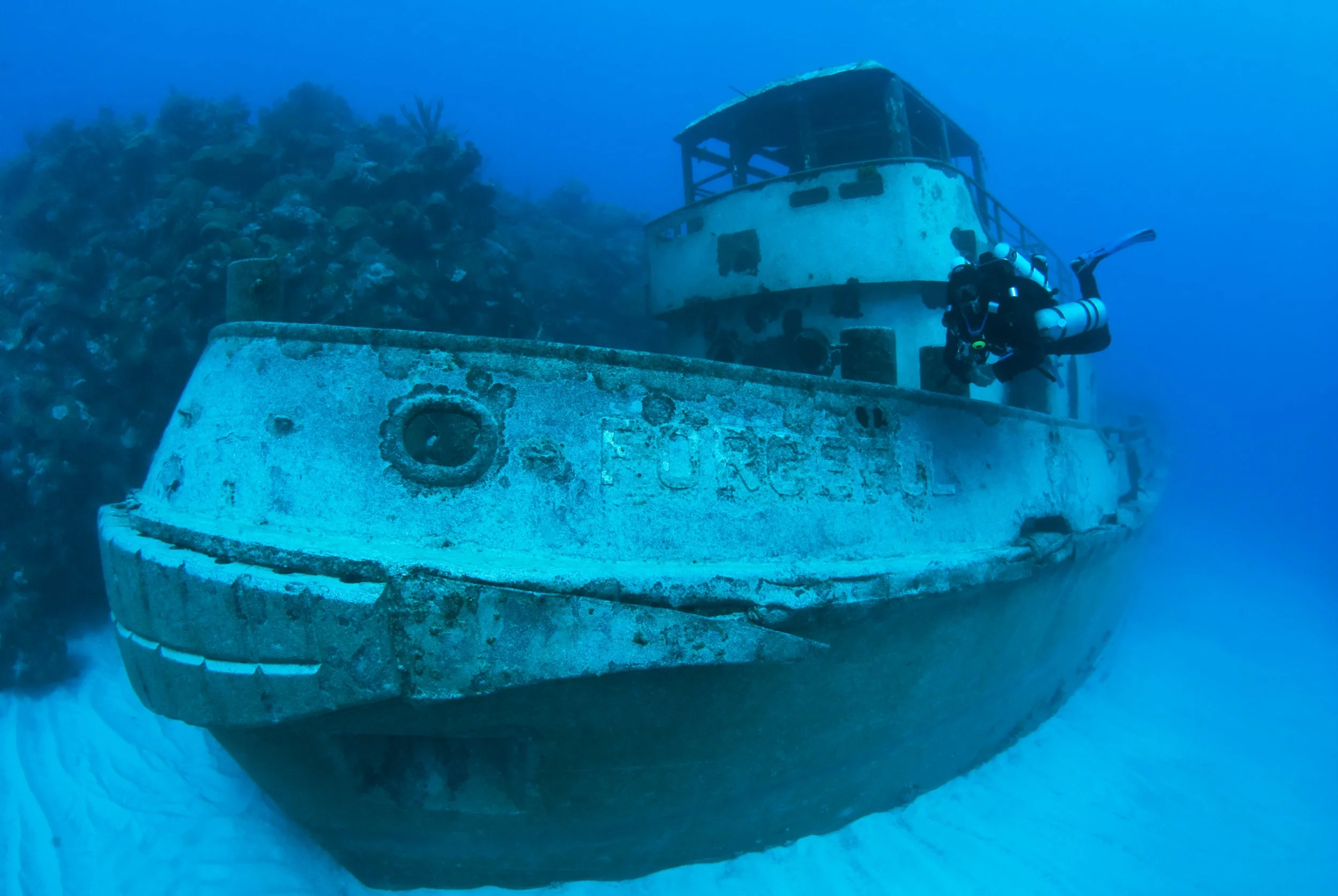
Nearby lies the Forceful, a former Dockyard tug intentionally sunk in a sand patch. Storms pushed her against the reef, creating dramatic swim‑throughs in her engine room and a memorable pass beneath her huge propeller. “Bermuda” is still boldly stamped on her stern, a perfect photo moment. The two wrecks sit in 65 feet of water, separated by an S‑shaped ribbon of sand.
North Carolina
The North Carolina, a Scottish‑built barque, limped into Bermuda in 1879 with a damaged rudder. Repairs were made, spirits lifted, and she set out again — only to run aground two days later. A final attempt to refloat her ended disastrously when an anchor smashed through her hull, sending her straight to the seabed.
She now sits upright on a sandy bottom, dignified even in ruin. Her bow and stern remain recognizable, while the mid‑section has collapsed into a tangle of iron and coral. It feels like visiting a ship that tried everything to survive but ultimately surrendered to the sea.
Minnie Breslauer
The Minnie Breslauer was a 300‑foot English steamer on her maiden voyage when she struck Bermuda’s reef on New Year’s Day 1873. She was being towed toward safety when she finally succumbed and slipped beneath the waves.
Today her bow lies shattered across the reef, while her stern rests more peacefully in the sand. Her enormous boiler and propeller remain unmistakable, silent reminders of a ship that never got to finish her first journey.
The Airplane
This wreck isn’t a ship at all but a Cold War‑era Boeing B‑50 tanker, heavily modified and flying home from the Azores in 1963. When an auxiliary jet engine exploded mid‑flight, flames raced across the wing. Six crew members parachuted to safety before the aircraft tore apart and fell into the sea. The commander, John “Curley” Moore, was still strapped into his seat when divers first reached the wreck.
The plane now lies in two great pieces nestled among coral heads. Aluminum gleams softly in the blue light, and schools of sergeant‑majors farm algae along the fuselage. It feels strangely peaceful — a machine built for war resting quietly in a thriving reef.
The Darlington
The Darlington was a sturdy iron steamer with a powerful engine and a hold full of cotton and grain when she approached Bermuda in 1886. But unfamiliar waters and a missing lookout sealed her fate. She struck the Western Reef with a shudder that echoed through her hull, and the sea claimed her quickly.
Now she rests on her port side in calm, shallow water. Her boilers, winches, and propeller shaft are still easy to recognize, and her rudder points upward like a finger marking her final position. On stormy days it even breaks the surface, reminding passing boats of the ship that lies below.
L'Herminie
L’Herminie was once a proud French frigate, bristling with 60 guns and built to project power across the world. But in 1837, after her crew was ravaged by yellow fever off Mexico, she was ordered home. Heavy Atlantic seas forced her captain to seek shelter in Bermuda — but the island’s northern reef had other plans. She grounded hard and never sailed again.
The Lartington
The Lartington set out from Savannah in 1879 loaded with cotton and confidence, a hybrid sail‑and‑steam workhorse built to cross oceans. Four days into her voyage, a monstrous wave — sailors swore it towered over 100 feet — slammed into her hull and opened a fatal wound. Captain George Dixon turned for Bermuda, racing the sea itself. She almost made it. The Lartington struck the reef at Western Blue Cut and settled into the shallows, her crew rescued and her cargo mostly saved.
Today her bow still rises dramatically toward the surface, an upturned silhouette that glows in the sun. Her boilers rest like sleeping giants, and the broken propeller at her stern feels like a final exhale from a ship that fought hard to survive.
Reef sites
South West Breaker
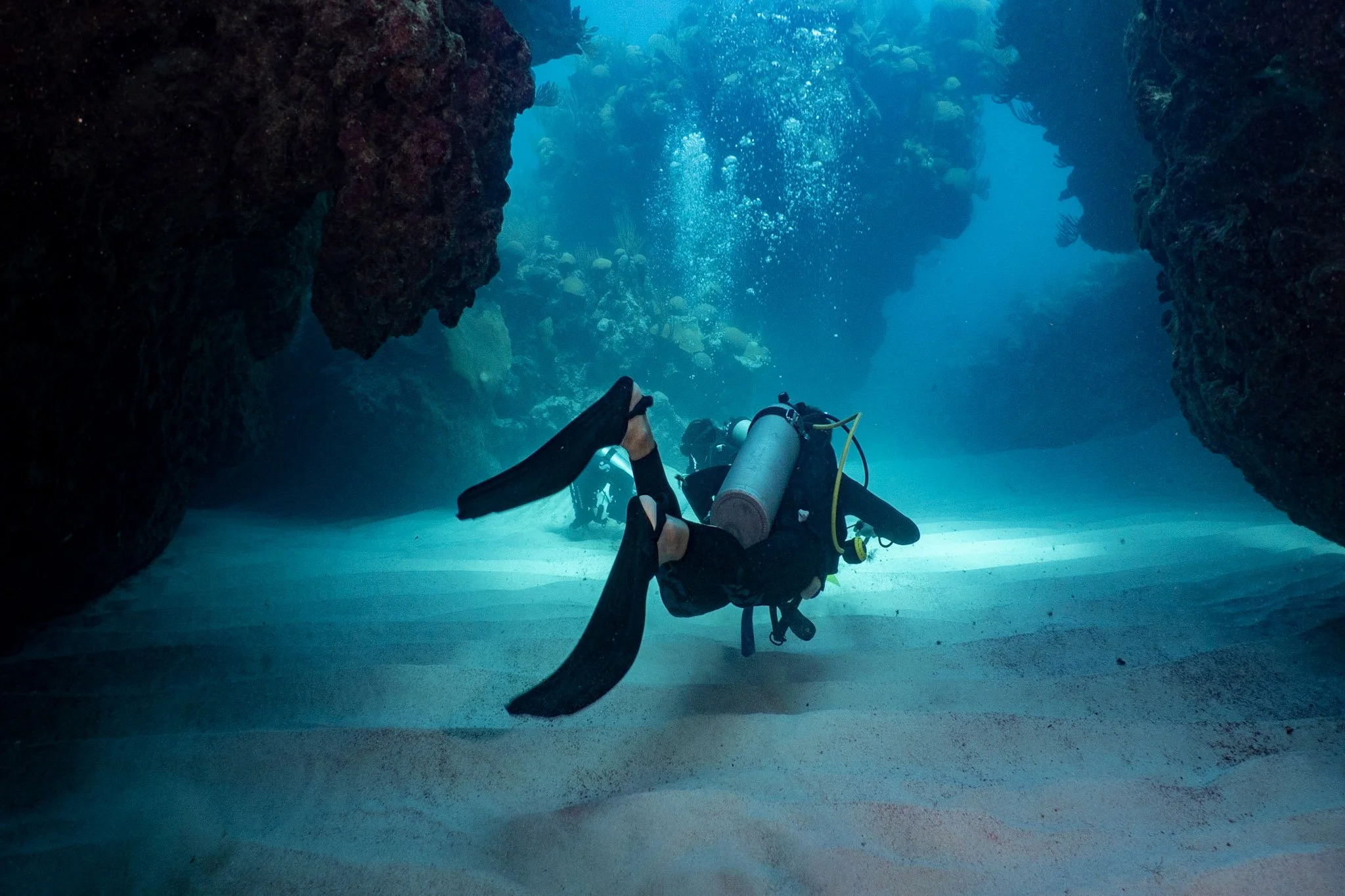
South West Breaker earned its fame in the opening scene of The Deep, and divers quickly discover why filmmakers chose it. The reef bursts with life — clouds of fish swirl around you in numbers that rival a public aquarium. A single dramatic swim‑through cuts straight through the breaker, where glassy sweepers shimmer like liquid silver and snappers and groupers hover in the dim blue light. At certain times of year, the sun suddenly fades, and when you look up you realize it’s not a cloud at all but a vast school of barracuda drifting overhead. At just 35 feet, it’s a relaxed, magical dive that leaves a lasting impression.
Virginia Merchant
The Virginia Merchant technically counts as a wreck, but after sinking in 1661, the sea reclaimed her completely. Only after powerful storms do fragments of her wooden hull reappear, briefly reminding divers of the ship that once lay here. What remains now is a maze-like reef system — twisting tunnels, narrow swim‑throughs, and hidden chambers carved by centuries of ocean movement. The bottom sits at 55 feet, and the site is beloved by adventurous divers who enjoy slipping through tight passages and exploring the reef from the inside out. It’s a dive that feels like discovering secret rooms in an ancient castle.
Lost in Translation
Close to the bay and dive center, Lost in Translation offers a gentler version of the Virginia Merchant’s labyrinth. The reef rises in isolated clusters, each with its own personality, and the swim‑throughs here are wide, inviting, and perfect for divers who want a taste of adventure without the tight squeezes. At around 50 feet, it’s a peaceful, exploratory dive — the kind where you drift from one coral corridor to the next, never quite sure what’s around the bend but always delighted by what you find.
The Blue Hole Coral Reef
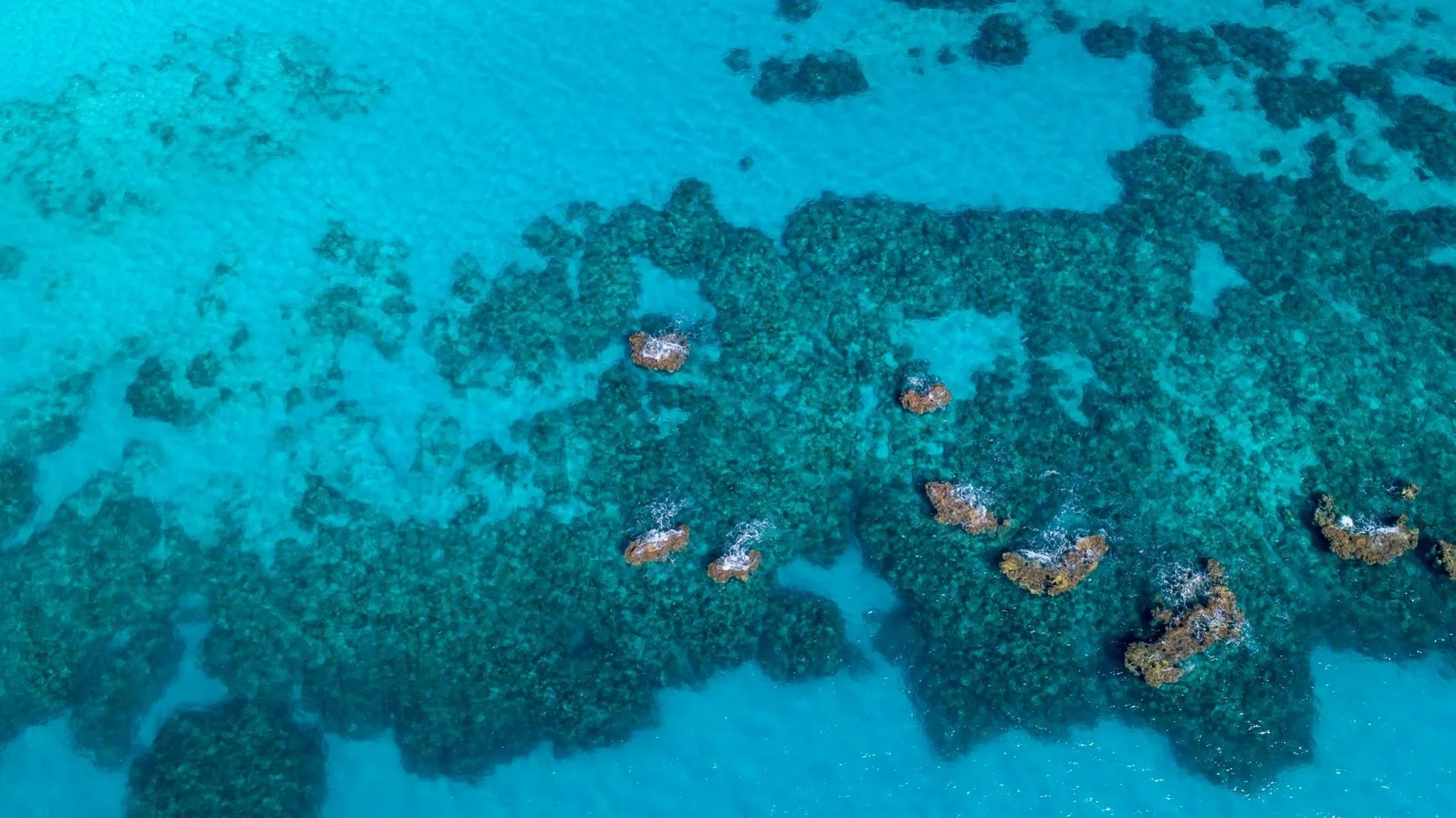
The Blue Hole sits where Bermuda’s calm shallows suddenly meet the open Atlantic, creating a reef that feels like a gateway between two worlds. The site rises and falls in terraces, from 55 feet up to the sunlit surface, giving divers the sense of drifting through a natural amphitheater. On stormy days, lobsters retreat from the rough surf and tuck themselves into the deeper overhangs, their antennae waving from the shadows. Massive sea fans sway gently in the surge, and if you scan the sandy patches with patience, you might spot a Leopard flatworm rippling across the bottom like a living ribbon. It’s a place full of quiet surprises.
Tarpon Hole
One of the newer sites on the map, Tarpon Hole has quickly become a favorite. The buoy was placed in 2013, marking a reef full of arches, channels, and hidden corners at a depth of 55 feet. Close to the breakers off Elbow Beach, the site feels wild and full of movement. Jacks and large snappers often patrol the arches, slipping in and out of the shadows. The reef is cut with little pathways that lead you over, under, and through the coral, making every dive feel like a small expedition. It’s the kind of site guides love to show off.
Hangover Hole
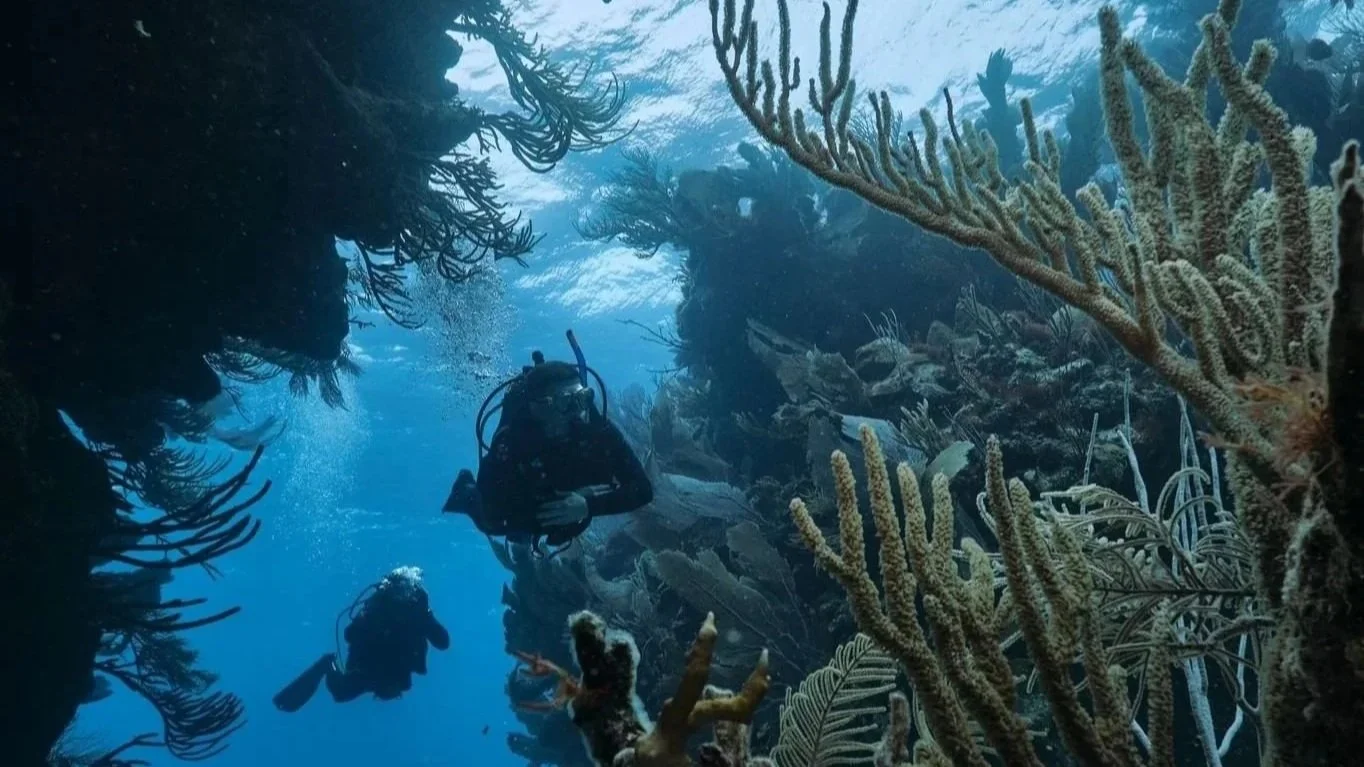
Hangover Hole is a reef for divers who enjoy slipping into the quiet heart of the ocean. With a maximum depth of 55 feet, it’s dotted with swim‑throughs that run along the base of the reef, letting you explore the inner chambers of this ancient volcanic formation. Light filters in from unexpected angles, illuminating sponges and coral that have grown undisturbed for centuries. It’s a serene, almost meditative dive — the kind where you emerge feeling like you’ve wandered through a place the ocean has been shaping since long before humans ever arrived.